Cook what you already have. Save up to €1000/year per person.
OH, a potato! is a meal planner designed to reduce food
waste. Traditional meal planners start with recipes and
build shopping lists around them. The result is often
half-used ingredients and a plan that assumes perfect
follow-through.
OH, a potato! flips the process. It starts with what's
already in your fridge and pantry, suggests meals around
those ingredients, optimises leftovers, and learns from your
cooking and shopping habits to minimise food waste over
time.




We believe every ingredient should reach its full potential,
and everyone should be able to make that happen without it
feeling like a second job.
Households generate 50-60% of all food waste globally.
People care, they feel guilty, but the systems around them
don't help. We're closing the gap between intention
and action by building a tool that adapts to the real life
of each individual household, not ideal life. The mission
is to make waste reduction effortless and rewarding enough
that it becomes a habit, not a chore.






What to expect when you download:
Built to waste less, every day
Fridge & receipt scans: Log everything. Waste nothing. Real-time spoilage warnings and rescue options Recipe suggestions: Based on what's at risk, what’s seasonal, leftovers Leftover-optimized plans: Use up what you have left from ingredients you already planed for other meals. Shared planning: One team, one list, all recipes.
Your personal cash & climate dashboard
Track how much money and CO₂ you've saved this month, this year, or all-time. You'll see milestones that actually mean something: "€52 and 41 kg CO₂? That's the chef's knife you've been eyeing." And you're not doing it alone. Every cooked meal contributes to a growing, global food-saving mission.
The more you cook, the smarter your Potato gets
72% of Europeans say they're food-waste conscious. But only 37% consistently meal plan. But waste levels haven't changed in 5 years. So this isn't an awareness problem.
The real issue is that the tools people have don't match how they actually live. Most apps assume you'll become a perfectly organised person who plans meals in advance, shops exactly right, and never has a week that goes sideways. People won't rewire their routines for an app. What they need is something that adapts to them: their fridge, their schedule, their habits, and makes better choices the easier choice. That's how we're building OH, a potato!
If you've ever said these things...
- I buy a bag of arugula, use a bit, and don't know what to do with the rest.
- I want to make a plan. But not feel trapped by it.
- I can't commit to what I'll want to eat next Thursday.
- I planned it. Bought it. Now I don't want it.
- I want variety but not a 50-item grocery list.
- Saved 47 TikTok recipes. Cooked none.
- I hate waste but also don't want lentil soup 5 days in a row.
- I ask my partner what to eat. They say 'pizza' or 'I dunno.'
- I want to try new recipes but not on a Tuesday night.

This isn't for everyone. (But it might be for You.)
You want to cook more, waste less, and stop feeling bad about groceries gone rogue. You like a bit of weird with your utility. You want results, not rules. Then yeah. It's for you.
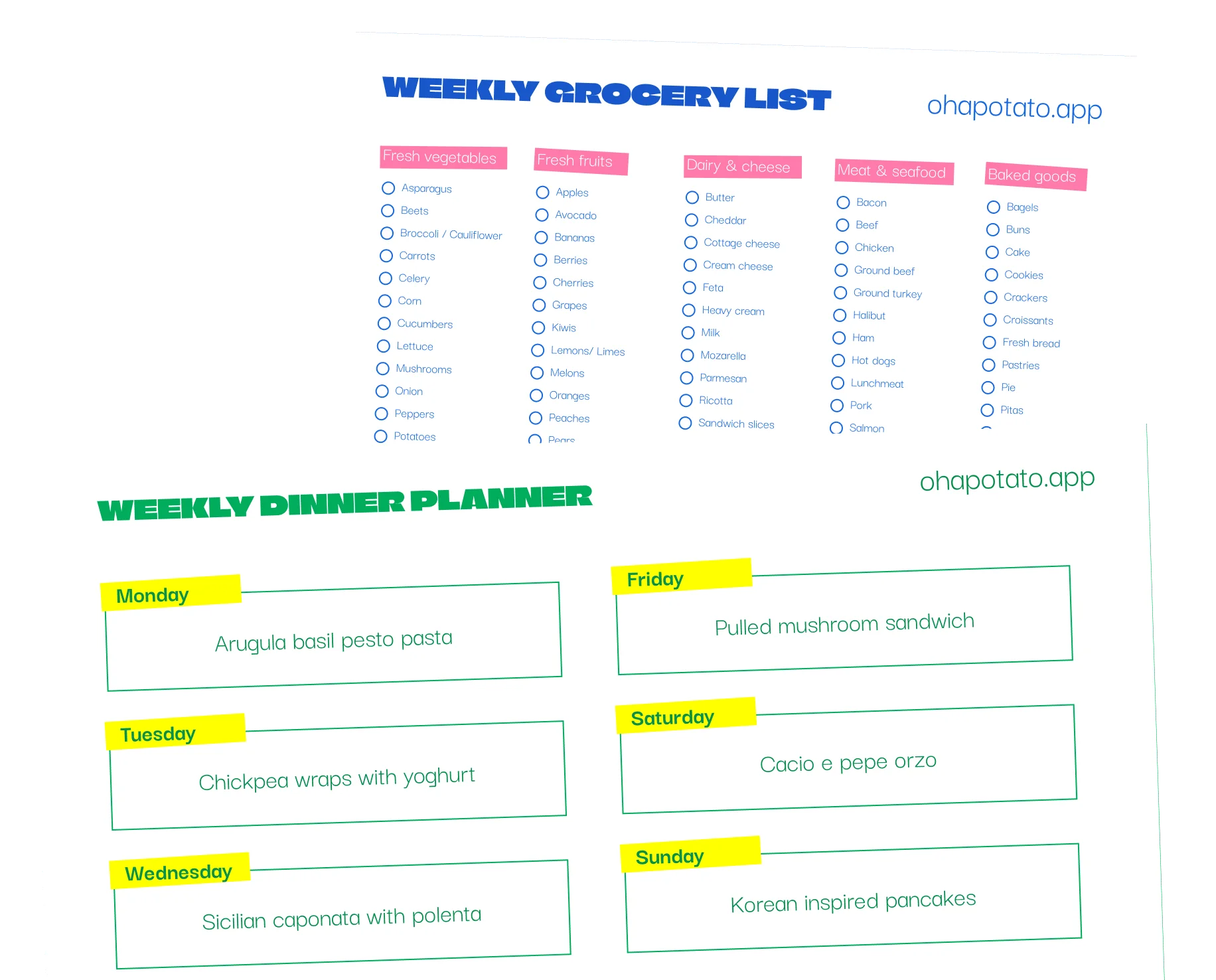
Too soon for the app?
Start with the free grocery shopping checklist and dinner planner templates.
Printable. Low-effort. This is your soft launch.
That the problem isn't laziness or not caring. It's disconnection.
We've made food disposable. When you can buy strawberries in January and pumpkins in June, when everything is stocked year-round at the lowest price in history, food stops feeling special. It becomes just another product, something to buy, forget about, and replace. The friction of wasting it is lower than the friction of managing it. The system was designed this way.
People aren't ignoring their fridge because they don't care. They've just lost the habit of attention, what's in there, what's about to turn, what they actually need. That connection between buying and eating and noticing has quietly faded for most of us.
And what we see from our users is that meal planning is what rebuilds it, because it requires a moment of attention. What do I have? What do I actually need? That small pause changes behaviour more than any amount of awareness content.
You don't need to grow your own food to get that back. You just need a small nudge to notice what you already have.