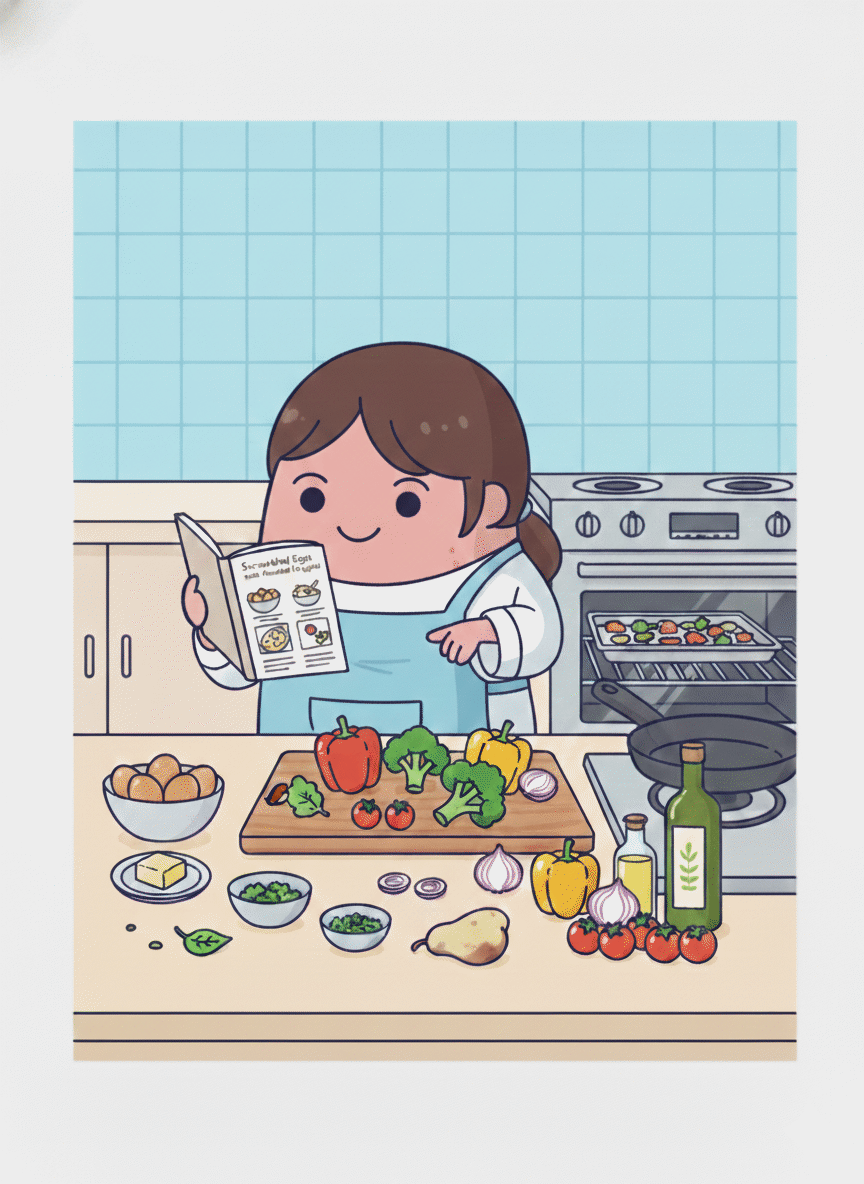
Ever downloaded a meal planner app and felt personally attacked by its optimism? Same. Some days, the energy is "homemade falafel." Other days, it's "toast and whatever emotional seasoning you're working with." That's why OH, a potato! isn't just any meal planner app, it adapts to your energy, your fridge, your taste, your household, and your… Tuesday feelings. Because meal planning isn't just about food. It's about how much life you've lived since breakfast.
This guide walks you through how to match meals to your mood, how real people actually plan (thanks Reddit), and how the right meal planner app can help you feel nourished instead of overwhelmed. And yes, we will absolutely discuss that moment when chopping an onion feels like filing taxes.
what is a meal planner app?
A meal planner app helps you organize what you're going to cook throughout the week. But depending on the app, that can mean anything from rigid diet templates to something much more flexible and human. (There's a reason many people abandon meal planning apps after a few tries.)
Most traditional apps assume you want structure, motivation, and clean hands at all times. But younger solo and small-household cooks? We're dealing with:
- irregular work schedules,
- limited fridge space,
- wildly fluctuating energy levels,
- meals that must be cheap, comforting, and fast,
- food waste guilt,
- and the emotional burden of planning for one or two people.
OH, a potato! is designed for this reality. It gives 1-2 person households a system that adapts as your week unfolds. It shows you how much you're saving (in money and CO₂), helps you use what you already have (from recipes to preservation techniques), and simplifies shared planning without nagging anyone.
Instead of telling you what you "should" cook, it meets you where you are, even if where you are is standing in front of the fridge, holding a zucchini, trying not to cry.
how does your energy level affect meal planning?
Meal planning isn't just logistical. It's emotional and cognitive.
One Redditor put it perfectly: "Cooking isn't hard because it's complicated. It's hard because I'm wiped."
Executive function differs depending on:
- how much sleep you got,
- how social your day was,
- whether you commuted or worked from home,
- PMS,
- budget stress,
- or simply how many decisions you've already made today.
This is why a good meal planner app shouldn't just store recipes. It should help you map meals to the energy you actually have.
OH, a potato! lets you build plans that flex. Your low-energy meals can sit next to your ambitious ones, and if your week goes sideways, the app adapts automatically based on what expires the soonest in your fridge.
what meals fit different moods?
Let's name some very real moods and find the dinners that fit them.
low-energy evenings
When even peeling a carrot feels dramatic, these are the nights for:
- quesadillas,
- scrambled eggs with whatever veg is wilting,
- roasted potatoes and frozen veg,
- fridge-clear frittatas,
- simple pastas.
Reddit users said they rely heavily on leftovers or freezer portions when the day drains them. This is where batch cooking on a random burst-of-energy day pays off. For a deeper look at how planning and prepping compare, see our tips to prevent food waste guide.
motivated days
We all get those sudden bursts of cooking inspiration, usually after watching three cooking TikToks or passing a pretty display of herbs.
These are the nights for:
- trying that new soup you saved four months ago,
- sheet-pan gnocchi,
- bolder flavors,
- or something that takes an hour but rewards you tomorrow.
People on Reddit often batch-cook on days like this. OH, a potato!'s meal planner app helps you build these into your week and reuse them later.
the in-between mood
Not tired, not energized, just hungry.
These meals are perfectly practical:
- stir-fry with a sauce you can shake in a jar,
- pasta with roasted veg and pesto,
- chicken mixed into tacos, salads, or bowls,
- a pot of rice that anchors multiple meals.
This is also where ingredient-based planning shines, start with what's in the fridge and let the app suggest meals from there.
do people plan by recipe or by ingredients?
After reading through dozens of Reddit threads, the answer is: both, depending on the week.
Here's a snapshot:
| Approach | What People Said |
|---|---|
| Ingredient-first | "I shop my pantry and build meals from what needs using." |
| Recipe-first | "I write a weekly menu and then shop for it." |
| Hybrid | "Depends where I am in the grocery cycle and how tired I am." |
| Sale-based | "If chicken is on sale, that's the theme of the week." |
| Motivation-based | "Sometimes I cook for three days straight, sometimes it's PB&J." |
This is exactly why OH, a potato! doesn't force a single method. It supports:
- ingredient-based planning with the fridge scanner or grocery receipt scanner
- recipe-first planning with the recipe importer, and
- shared planning when you're not the only one deciding.
Because your planning style doesn't just change week to week, it changes hour to hour.
how people actually stay consistent (according to Reddit)
Across threads, whether it was about meal planning, cooking for one, or making leftovers feel exciting, some patterns emerged.
people make more when they're motivated
A lot of solo cooks prep extra portions so they don't have to rely on willpower later. Some cook one protein and remix it throughout the week.
leftovers are survival tools
Stews, curries, chili, pasta bakes, and rice-based dishes appeared repeatedly as meals that reheat well and reduce cognitive load.
cooking for one is emotionally hard
People said cooking alone feels unmotivating, pointless, or lonely. But they also said that when they learned to treat cooking as care, not a chore, the whole process shifted.
OH, a potato! supports this by giving visual progress: money saved, waste reduced, CO₂ avoided. These reinforce that even small, simple meals matter.
simple systems beat perfect systems
People rely on:
- freezer lists,
- pantry staples,
- rotating base meals,
- or prepping ingredients like chopped veggies or rice.
A good meal planner app doesn't replace these habits, it supports them. If you're just getting started, our beginner's guide to week meal planning walks you through the basics.
how OH, a potato! adapts to each household
This is the feature we're spotlighting: shared household planning.
Meal planning collapses fast when only one person is responsible for everything. OH, a potato! gives you:
- one shared weekly plan,
- one shared grocery list,
- one recipe stash,
- visibility into who added what,
- flexibility to swap meals when life changes.
If you live alone, this still helps, your plan becomes your accountability buddy. But if you live with someone else, it prevents the "Oh, I thought YOU were buying tortillas" moment.
The app also adapts to your actual ingredients, actual time, and actual mood. It doesn't assume you're striving for perfection. It assumes you're human.
how to make meal planning stick
Here are evidence-backed, Reddit-approved strategies:
- Plan based on your real week, not your fantasy week.
- Use ingredients that overlap, so nothing goes to waste.
- Cook larger portions on your high-energy days.
- Assign meal types to days, not specific recipes.
- Let technology do the heavy lifting: automated grocery lists, fridge scanning, and shared planning reduce mental load.
- Allow for the bailout meal, there should always be one meal that requires zero effort.
- Celebrate progress, not perfection. Your CO₂ and money-saving dashboard keeps you motivated.
Cooking for yourself is still cooking for someone important. And with the right meal planner app, planning your meals can feel like support, not pressure. You deserve meals that fit your life, your energy, and your mood.
glossary
- Meal planner app: A tool for organizing meals and groceries.
- Shared household planning: Lets roommates or partners coordinate meals and shopping.
- Fridge scanner: Reads your ingredients from a photo and suggests meals.
- Energy-based planning: Choosing meals according to how much effort you can give that day.
- Batch cooking: Making large portions to eat later.