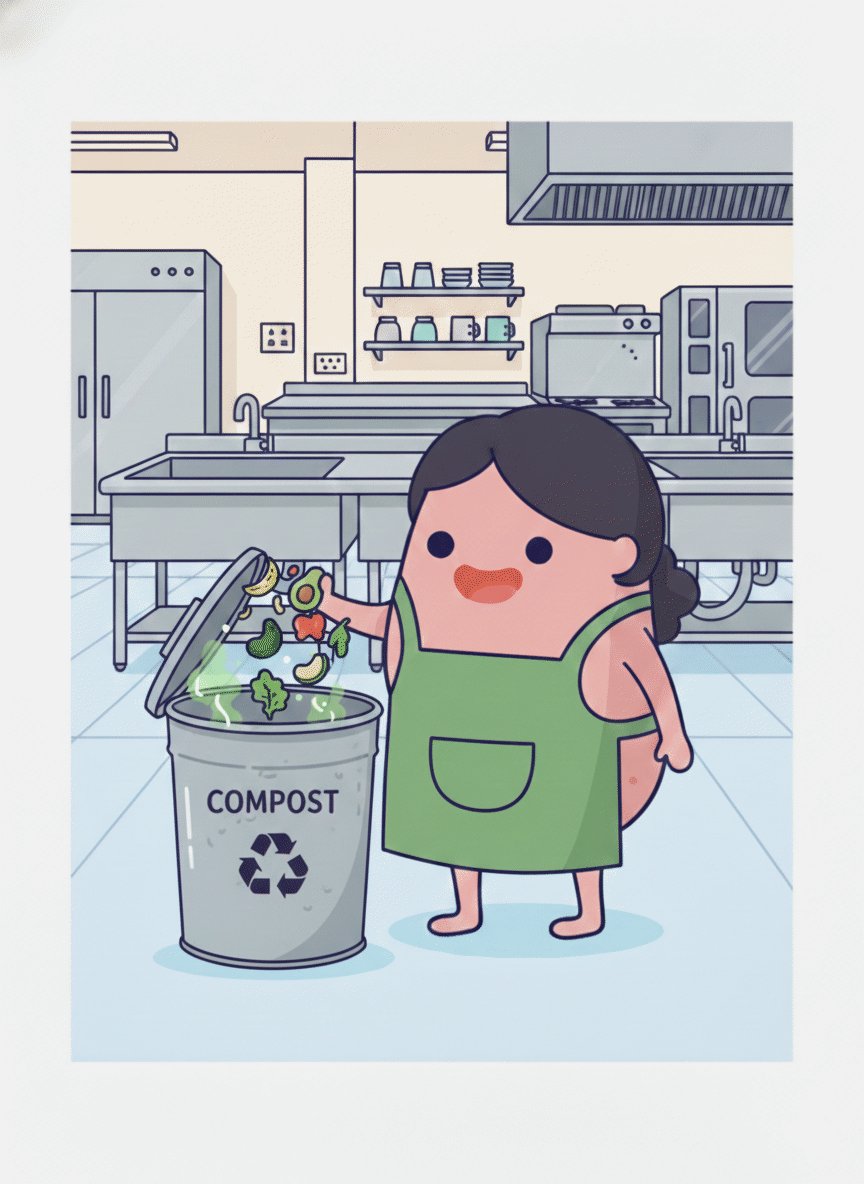
Every time you toss wilted rucola, overripe banana, mushy cucumber or the weird leftover curry you meant to eat, you're not just wasting food. You're tossing cash, climate goals, and peace of mind. But the good news? You can start reversing that damage right at home. Here's your practical, non-overwhelming guide to food waste recycling, and why it matters, especially in the EU.
what is food waste and why it's a problem
Let's define it: food waste happens when food meant for consumption gets thrown out. That includes spoiled leftovers, moldy bread, forgotten produce, and even that unopened yogurt that somehow expired two weeks ago.
Globally, we waste about 1.05 billion tonnes of food per year, with 60% of that waste coming from households (European Commission).
In the EU, households generated 32 million tonnes of food waste in 2022, over half of all food waste in the region (UNEP Food Waste Index Report 2024).
why this matters for the planet
Food waste isn't just smelly; it's a climate issue. Wasted food emits 8–10% of global greenhouse gases, more than aviation (UNFCCC). In the EU alone, food waste is responsible for 252 million tonnes of CO2e, ranking it as the bloc's 5th largest emitter (Earth.org).
Plus, consider the resources wasted:
- 21% of freshwater
- 19% of fertilizer
- 18% of cropland
- 21% of landfill space
All going to food that never got eaten (NRDC).
why this matters for your wallet
EU citizens lose €500-€1300 per year on food waste, including both the cost of tossed groceries and the indirect cost of eating out when meals at home fall through.
the food waste hierarchy: reduce, reuse, recycle
Before we talk recycling, we need to talk priorities. The food waste hierarchy guides how to best handle excess food:
1. reduce: stop the waste before it starts
This is where real impact lives. Meal planning, smart shopping, and good storage are your biggest weapons.
That's why OH, a potato! starts with prevention. The scanner helps you take inventory of what you already have, and the ingredient-based recipe suggestions show you exactly how to use up what's left. You'll get reminders when something's about to expire, along with recipes to cook or preserve it. The app also teaches you how to store food properly to extend freshness, and offers last-minute options like jam, pickling, or sauces when cooking plans fall through.
2. reuse: share it forward
If you can't eat it, donate it. Or offer it to friends (yes, someone wants your extra banana bread).
Some cities also collect edible scraps for animal feed.
3. recycle: when it can't be eaten
This is where food waste recycling shines: turning scraps into compost, biogas, or even industrial inputs.
how food waste recycling works
1. at home: caddies and compost
You separate food scraps (veggie peels, coffee grounds, eggshells, etc.) into a food waste bin. In some EU cities, these are collected curbside; in others, you bring them to drop-off points.
Home composting is also an option if you've got the space. Worm bins are a thing. They're less gross than they sound.
2. anaerobic digestion (aka: turning waste into energy)
Organic waste is placed in oxygen-free tanks where it breaks down and produces biogas, a renewable energy source, and digestate, a nutrient-rich fertilizer.
3. industrial composting
Here, food waste becomes soil amendments used in agriculture. Large-scale composting facilities reach temperatures high enough to break down bones, citrus peels, and other tricky bits.
4. rendering and other uses
Animal byproducts are sometimes processed into pet food or industrial oils.
benefits of food waste recycling
environmental wins
- Less methane from landfills
- Reduced greenhouse gas emissions
- Less demand for landfill space and fewer incinerators
economic benefits
- Households and cities save money on waste disposal
- Biogas and compost can be monetized or reused locally
energy recovery
Biogas from anaerobic digestion can power homes, buses, and more.
In short, food waste isn't just a burden, it's a resource waiting to be tapped.
real-world examples in the EU and US
council food waste collections
Many EU cities provide brown bin food waste collection, later processed into compost or energy.
business and retail initiatives
Supermarkets in Denmark and France redistribute near-expiry items to food banks. Some even partner with food waste apps to track and reduce backroom spoilage.
hospitals and institutions
Large-scale kitchens in schools and hospitals now monitor food waste daily. In Sweden, some institutions save up to 30% in costs by optimizing menus and portions.
municipal composting & tech-driven solutions
In the US, cities like San Francisco and Seattle have led the way with mandatory composting laws and curbside organic waste collection. San Francisco, for instance, has diverted over 80% of its waste from landfill, thanks in part to its food scrap composting program.
On the tech side, companies like Too Good To Go and Imperfect Foods have partnered with retailers to redistribute unsold food. Speaking of imperfect, ugly produce makes perfect meals. Meanwhile, apps like Mill offer home bins that dehydrate and transform food scraps into usable chicken feed, integrating seamlessly with municipal systems in places like Minneapolis and New York.
how to start food waste recycling today
1. get a food waste bin
Check if your city provides one. If not, any sealable bin will do.
2. know what goes in
General rule: no plastic, no liquids, no meat (unless your system allows it). Composting guidelines vary, so check your local setup.
3. compost at home (if you can)
Worm bin, countertop bin, or backyard pile, choose what fits your space and squeamishness.
4. use tech to reduce waste upstream
Apps like OH, a potato! help you waste less in the first place, so your food waste bin stays emptier. Try the automated grocery list: it only adds what you actually need.
5. freeze, save, and repurpose
Old bread = croutons. Wilted herbs = pesto. Extra yogurt = pancake batter. Need more ideas? Try Fridge-Cleaner Friday.
challenges and what's next
barriers to adoption
- Not all municipalities collect food waste
- Confusion about what's compostable
- Lack of space for home composting
- Guilt fatigue and habit inertia
the future is smarter
- AI-driven waste tracking (yes, that's a thing)
- Smart bins that auto-sort waste
- More cities adding curbside compost collection by 2027 (hello, EU mandates!)
final potato: it all adds up
Recycling food waste helps. But preventing it? That's where the real magic happens. Learn how to control food waste at home with practical tips. And luckily, that's where OH, a potato! lives.
Just snap your fridge, get smart recipes, and let the app nudge you toward glory (or at least a cleaner kitchen).
Want to feel like a waste-saving wizard without the spreadsheets? Start with one meal plan. Or one leftover rescue. Your bin will thank you.
glossary
- Food waste: Edible food discarded at the consumer level
- Anaerobic digestion: Breaking down organic matter in the absence of oxygen to produce biogas
- Biogas: A renewable energy source made from organic waste
- Digestate: The leftover material from anaerobic digestion, used as fertilizer
- Rendering: Processing animal waste into usable products
For more on turning leftovers into genius, check our dinner planner or dive into week meal planning.